In California, a spouse, parent, child, sibling, grandparent or coworker added as a driver can't be charged an additional-driver fee — yet many renters still pay it at the counter. Instead of ranking companies, this guide follows one rental from start to finish: before you book (Taiwan, Hong Kong and mainland China licenses, age, extra drivers, deposits and credit cards), at the counter (LDW, SLI, PAI, PEC — and why liability matters most for visitors), on the road (dirt roads the contract forbids, tolls and bridges, tickets and parking), and returning the car (fuel, EVs, the last five minutes, checking your statement).
Key facts
- If you remember just one thing: before you sign at the counter, read every charge on the contract, line by line.

▶ Watch the video · YouTube
Stage 1 · Before you book: your license
First, separate two questions: can you legally drive in the US, and will a rental company rent to you?
Take California. Vehicle Code section 12502 says a nonresident over 18 with a valid license from where they live, carried with them, may drive in California without a California license.
But rental companies are stricter than the law. Enterprise, for example: if your license isn't in a Latin alphabet, such as Chinese, Japanese or Russian, you must also bring an International Driving Permit. The permit can't be used alone; you must show it with your home license. Digital licenses are not accepted.
Hertz says: with a foreign license, show a passport in the same name as a second ID. If the license isn't in English, an IDP is recommended for translation. An IDP alone is not enough to rent. And one easy-to-miss rule: the license must be valid for the entire rental.
Three kinds of Chinese licenses
With a Taiwan license, you can get an IDP at a motor vehicle office for 250 Taiwan dollars, the same day, valid for three years.
With a Hong Kong license, you can apply for an International Driving Permit from the Transport Department.
A mainland China license is harder: mainland China isn't part of the relevant international convention, so you can't get an IDP, and online offers to get you one are not credible. The usual approach is your original license, an English translation and your passport, but branches differ on whether they accept the translation. So after booking, ask the exact pickup branch directly, ideally in writing.
Age & additional drivers
The second thing to check when booking is age. Most US rental companies require you to be 21; Hertz rents from 20. Under 25, you pay a young-driver fee every day: about 19 to 25 dollars at Hertz, about 25 at Enterprise, Alamo and National, and about 27 at Avis and Budget. New York and Michigan allow renting from 18 by law, but the fees are higher.
Then additional drivers. Hertz, Enterprise and Alamo usually charge about 15 dollars a day, Avis about 13, and National doesn't charge. In California, the law from the opening, Civil Code 1939.19, says spouses, children, siblings, parents, grandparents, employers and coworkers can't be charged an additional-driver fee.
Whatever the state, remember this: everyone who actually drives must be registered on the contract at the counter. If an unregistered driver has an accident, your protection may be gone.
Deposits & credit cards
One last thing before booking: which card to use.
The company will put a hold on your card for the rental plus a deposit. The deposit depends on the car and the branch. At Enterprise, for example, an economy car at Minneapolis airport had a 44-dollar deposit; in downtown Boston, 250 dollars.
With a credit card, the hold is released after you return the car. With a debit card, the money is held in your bank account and can take five to ten days to come back. And at airports, if you can't show a return flight, some branches hold another 200 to 850 dollars.
So bring a credit card in the main driver's name and your return flight itinerary.
Stage 2 · At the counter: four kinds of coverage
At the counter, the easiest place to overspend is insurance. First, learn four abbreviations.
One: LDW or CDW, the damage waiver. If the rental car is damaged or stolen, you pay nothing or less.
Two: SLI or LIS, supplemental liability. It covers how much is paid if you damage someone else's car or injure someone.
Three: PAI, personal accident insurance; four: PEC, personal effects coverage. Many travelers already have these in their travel insurance.
Which coverage matters most
For international visitors, the one to look at most carefully is liability.
Rental companies usually provide only the state minimum. In California, since January 2025, the minimum is 30,000 dollars per person, 60,000 per accident, and 15,000 for property damage. A serious crash in the US can easily cost more in medical bills. International visitors don't have a US auto policy as backup, so supplemental liability is worth serious consideration.
For the damage waiver, check your credit card first. Some cards include rental damage coverage, but almost all cover only the car, not liability, and usually only if you pay with that card and decline the waiver at the counter.
Personal accident and effects coverage: if your travel insurance already covers them, you can say no. Before buying anything, check the daily price of each item on the contract and the total.
Before you drive off: walk-around video
After signing, don't rush off. Take your phone and record a walk-around video: every side of the car, all four tires and wheels, the windshield, and the mileage and fuel on the dashboard.
If there are scratches or dents, go back to the counter and have them noted on the contract. If there's a dispute at return, that video is your evidence.
Take another minute in the lot to set the seat, mirrors, navigation and phone. Most US rentals are automatic, but the lights, wipers and fuel-door release are in different places on every car.
Stage 3 · On the road: where the contract says no
Once you're on the road, the first thing to know is where the contract says you can't drive.
In a public contract between Hertz and a university, for example, the car may not be driven off paved, graded or maintained roads unless agreed in writing beforehand.
Many contracts put this under prohibited use. Break it, and the damage waiver usually doesn't apply: tires, underbody and windshield damage may all be on you.
Death Valley from our last episode is a good example: in an ordinary rental car, skip dirt roads like Titus Canyon or the Racetrack. Driving out of the US, for example into Mexico, also needs permission in most contracts.
Toll roads & bridges
Second: toll roads. Many toll plazas in the US no longer take cash; they just photograph the plate. The rental company pays and adds a service fee.
According to AAA's March 2026 summary: Avis charges 6.95 dollars on days you use a toll road, up to 34.95 per rental. Enterprise charges 4.95 a day, up to 34.65. Hertz varies by state and location.
Most California freeways are free. Tolls are mainly on the San Francisco Bay Area bridges; the Golden Gate Bridge, for example, is all electronic, with no toll booths.
So turn on "avoid tolls" in your navigation app, and if you do need a toll road, ask how that branch handles tolls. Bills can arrive weeks later, so keep your contract and payment records.
Tickets & parking
Third: tickets. Red-light camera tickets and parking tickets go to the rental company and then to your card, usually with an extra admin fee.
For parking in the US, read the signs and the curb color: red means no stopping; rules can differ by day and night; move your car on street-sweeping days. If you can't read it, don't park there.
And one habit that matters in the US: at a stop sign, come to a full stop before you go.
Stage 4 · Returning: fuel & charging
The last stop: returning the car.
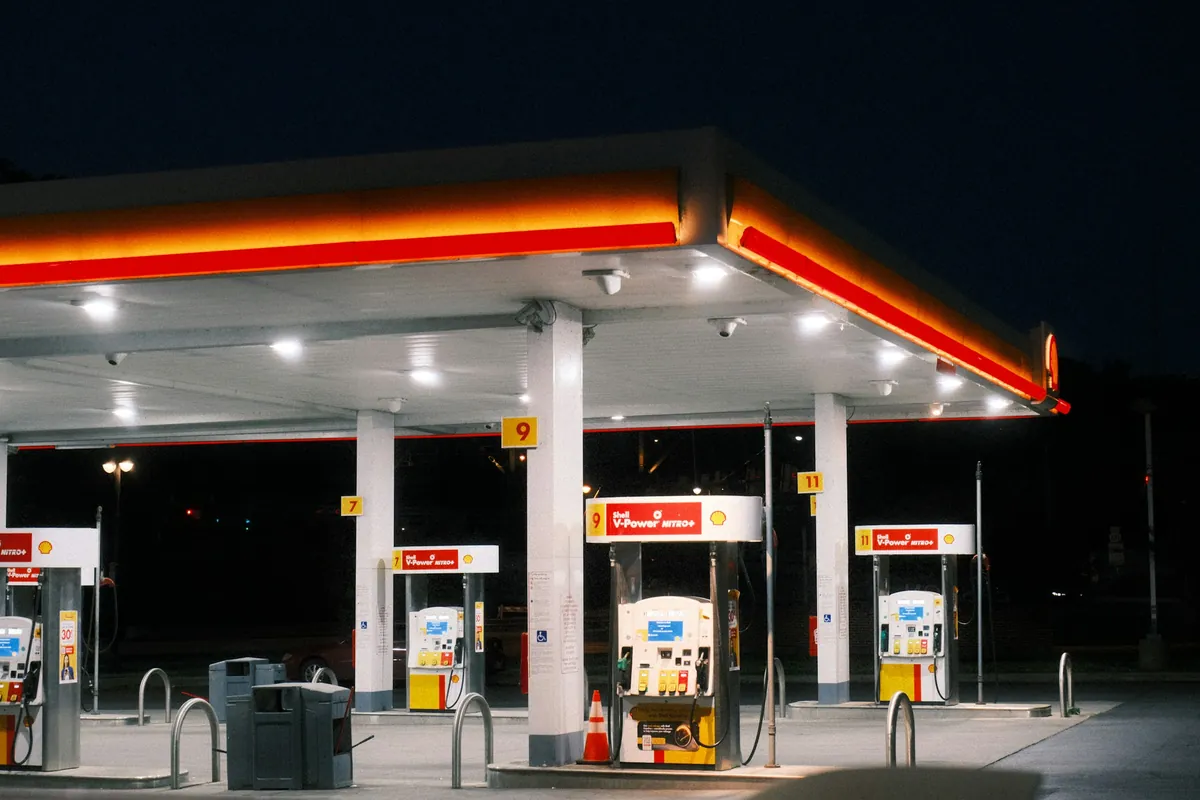
Most contracts are full-to-full. You have three choices: refill nearby yourself, usually the cheapest; prepay a full tank at the counter, with no refund for what you don't use; or let the company refill it, which can cost up to 10 dollars a gallon at some companies.
So photograph the fuel gauge at pickup, refill within 10 miles of the branch before returning, and keep the receipt.
If you rented an EV, ask what charge level to return it at and how you'll be charged if it's lower.
The last five minutes
Drive into the return lane and record another walk-around video, just like at pickup.
Ask the staff to check the car on the spot and get the final receipt before you leave. At airports, allow at least 30 extra minutes.
About a month after you get home, check your credit card statement: was the deposit released, and are there extra tolls, tickets or cleaning fees? If something's wrong, contact the company with your contract, videos and receipts.
The checklist
Before booking: your license, plus an IDP or translation, plus your passport; age and additional-driver fees; a credit card in the main driver's name.
At the counter: understand the four types of insurance and take liability seriously; register everyone who drives; say no to what you don't need.
On the road: no dirt roads, avoid tolls in navigation, read the parking signs.
Returning: refuel, record a video, get the final receipt.
General information only. Rules change; check official notices before you go.
Video chapters
- 0:00 Cold open: in California, your spouse drives free
- 1:04 Stage 1 · Before you book: your license
- 1:58 Three kinds of Chinese licenses
- 2:35 Age & additional drivers
- 3:34 Deposits & credit cards
- 4:19 Stage 2 · At the counter: four kinds of coverage
- 4:52 Which coverage matters most
- 5:46 Before you drive off: walk-around video
- 6:21 Stage 3 · On the road: where the contract says no
- 7:05 Toll roads & bridges
- 7:56 Tickets & parking
- 8:27 Stage 4 · Returning: fuel & charging
- 9:02 The last five minutes
- 9:28 The checklist
- 10:00 If you remember one thing
Official sources
- California Vehicle Code §12502:https://leginfo.legislature.ca.gov/faces/codes_displaySection.xhtml?lawCode=VEH§ionNum=12502
- California Civil Code §1939.19 (AB 901):https://legiscan.com/CA/text/AB901/2021
- Enterprise US license requirements:https://www.enterprise.co.uk/en/car-hire-faqs/us-renter-requirements/drivers-license-requirements.html
- Hertz license policy:https://www5.hertz.com/rentacar/location/unitedstates/washington/seattle/SEAT11
- AAA rental-car tolls (Mar 2026):https://cluballiance.aaa.com/the-extra-mile/advice/travel/avoid-costly-mistakes-when-paying-tolls-in-a-rental-car
- California minimum liability:https://newsroom.statefarm.com/understanding-californias-new-auto-liability-coverage-law-10-2024/
Routes, parking and gas stations, shown on maps and real footage, one section at a time.