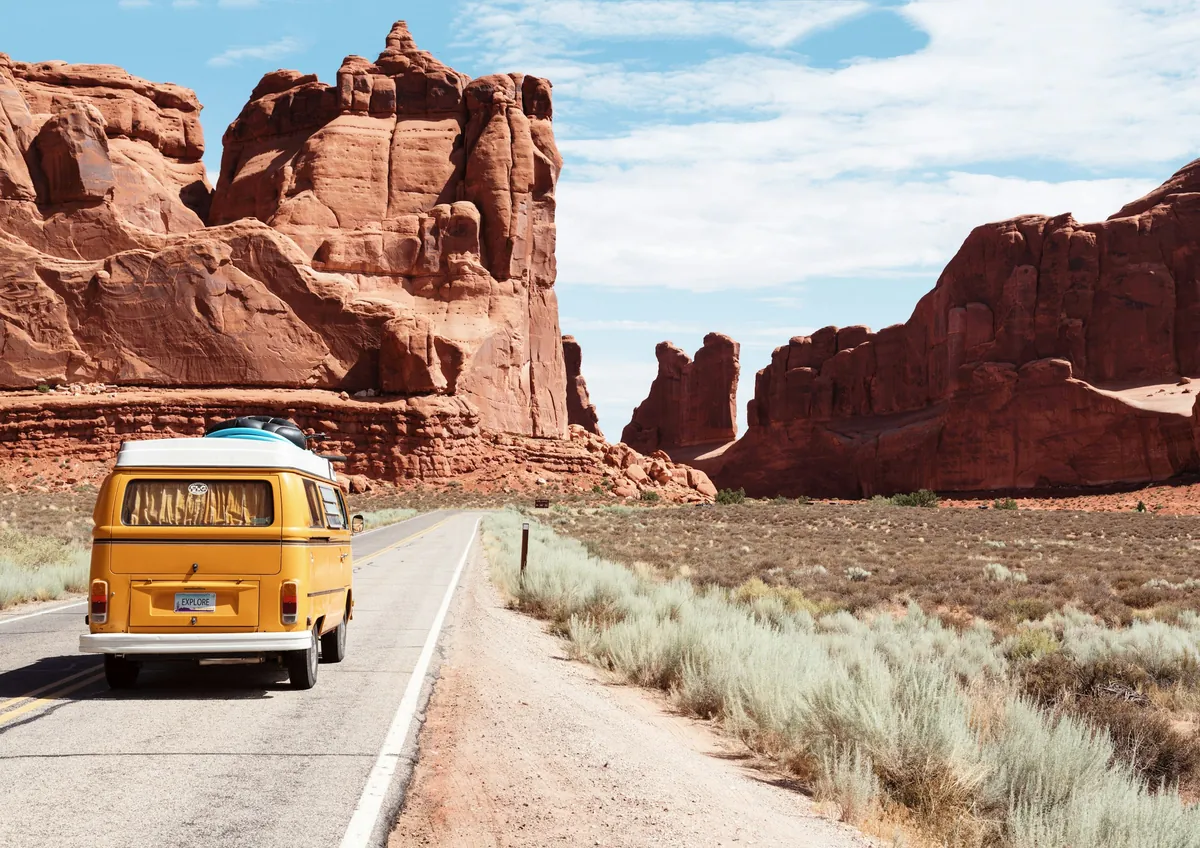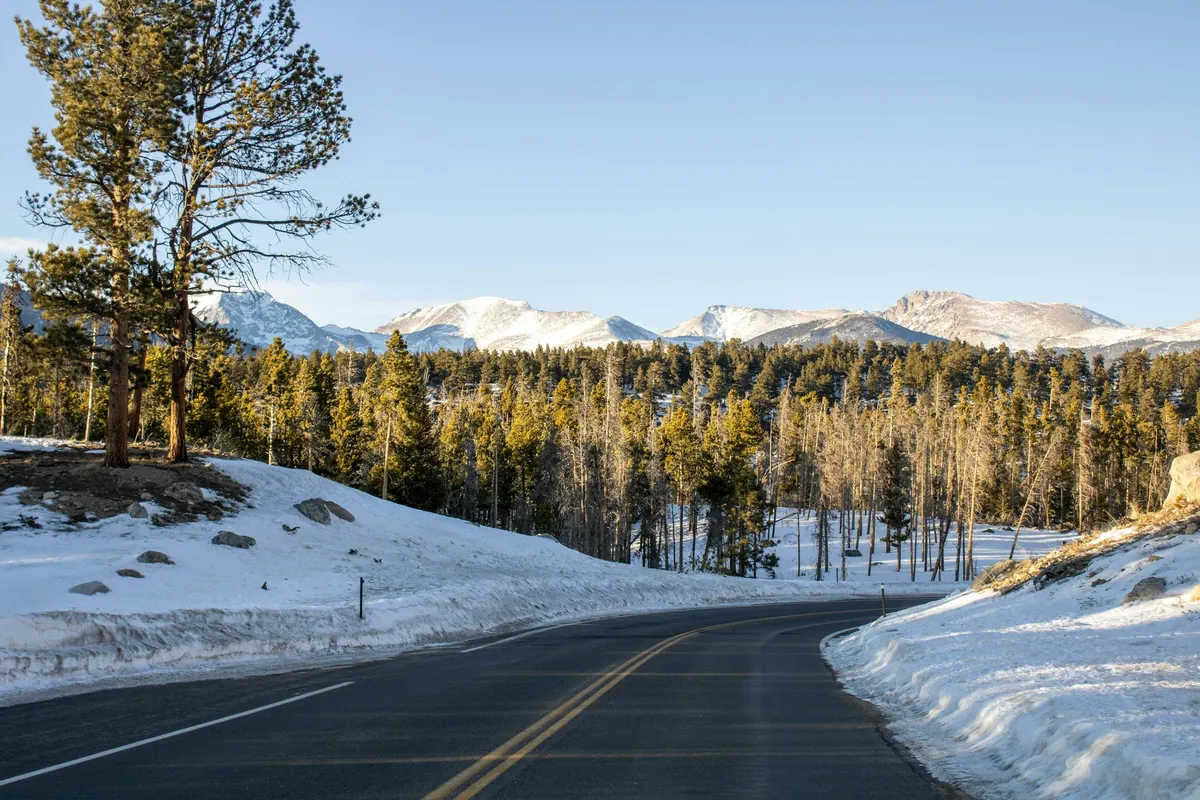
Winter road trips in the American West are a different game. This guide answers 10 questions: Yellowstone's winter road closures (only one road open from Nov 1), when the Grand Canyon North Rim closes, how to check conditions (Caltrans QuickMap, state 511 systems), what California chain controls R1/R2/R3 mean, whether 4WD needs chains, rental cars and chains, black ice on bridges, December sunset times, EV range in the cold, a winter car kit, what to do if you're stranded, and the best winter destinations.
Key facts
- Before you go, check park websites and state DOT conditions; most of Yellowstone and the Grand Canyon's North Rim can't be reached by car in winter.
- Carry chains into the mountains, even with 4WD; and ask your rental company whether you can use them.
- Arrive before dark, refuel at half a tank, and plan EV range at 60 percent.
- Information as of early November 2026; check the latest road conditions again before you go.

▶ Watch the video · YouTube
Q1: Which roads close in winter?
The most important thing first: in winter, some places simply can't be reached by car.
Yellowstone: since November 1, most roads and the West, South and East entrances are closed to regular vehicles. Only one road stays open all year, from Gardiner at the North Entrance, past Mammoth Hot Springs and the Lamar Valley, to Cooke City at the Northeast Entrance, weather permitting. Snowmobile and snowcoach travel begins on December 15.
Grand Canyon North Rim: according to the park website on November 3, it's open through November 30 or until the first major snowstorm. The North Rim gas station has already closed, and the historic lodge, destroyed in a 2025 wildfire, is still being planned for rebuilding. The South Rim is open all year.
Yosemite's Tioga Road and Glacier Point Road also usually close in November; we covered that in episode 5.
So step one for a winter route: check the conditions page of every national park on your list before you go.
Q2: How do you check road conditions?
On the road, conditions change every day.
California: Caltrans has a live map called QuickMap showing closures, incidents, chain controls and roadside cameras. You can also call 1-800-427-7623, which covers California plus the Lake Tahoe and Reno area of western Nevada.
Nevada, Arizona and Utah each have their own 511 road information systems, online and as phone apps, and in some states you can dial 511 directly.
My habit: check the night before, again before leaving in the morning, and once more before heading into the mountains.
Q3: What do chain controls mean?
On California mountain roads you'll see signs saying R1, R2 or R3: three levels of chain control.
R1: most vehicles need chains, but cars and light trucks under 6,000 pounds with snow tires on the drive wheels can skip them, as long as they carry chains.
R2: all vehicles need chains or traction devices, except four-wheel or all-wheel drive vehicles with snow tires on all four wheels, which must still carry them.
R3: every vehicle must chain up, no exceptions. This is rare; often the road closes before it reaches R3.
With chains on, the speed limit is 25 or 30 miles per hour. Pull completely off to the right to install them, never in a traffic lane. Roadside installers charge a fee; they're independent businesses, so get a receipt.
Q4: What about rental cars?
Many people get stuck here: the parks and Caltrans require chains, but many rental contracts don't allow them and don't supply them.
As we covered in episode 5, some rental companies say chains can't be used unless state law requires them. California chain controls are a legal requirement, so chaining up then is allowed. But rules vary by company and branch, so ask at pickup and get it in writing.
Two more points: when renting, you can usually only choose a 4WD or AWD class, not guarantee one; and snow tires are rare on rentals.
So if you're heading into the mountains in winter, buy chains for your tire size in a town below, or simply avoid routes over snowy passes.
Q5: Where do accidents happen most?
In winter the biggest danger often isn't heavy snow. It's ice you can't see.
Bridges and overpasses freeze before regular pavement, and shaded mountain curves can stay icy even at noon. Mornings and evenings, when temperatures hover around freezing, are the riskiest.
Some routes people drive often: Interstate 80 over Donner Pass to Lake Tahoe frequently has chain controls in winter, and Interstate 5 north of Los Angeles over Tejon Pass can close temporarily in heavy snow.
If the road looks wet and shiny, assume it's ice: slow down, leave more distance, don't brake hard, and don't jerk the wheel.
Q6: How early does it get dark?
In winter you have far less daylight than in summer.
In December the sun sets in Los Angeles around 4:40-something in the afternoon, and in Las Vegas even earlier, around 4:30. By a little after 5, desert and mountain roads are completely dark.
Most of these roads have no streetlights, and deer and other animals often step onto the road at night. So plan shorter driving days in winter, and ideally don't start an unfamiliar mountain road after 3 p.m.
Q7: Driving an EV in winter
EVs need a bigger buffer in winter.
In AAA's testing, at minus 7 degrees Celsius with the heater on, EV range dropped by an average of about 40 percent: 100 miles became fewer than 60. Charging also slows down in the cold.
Three tips: precondition the car and battery while it's still plugged in; heated seats use less energy than cabin heat; and plan every leg at 60 percent of your rated range. Don't run the battery down to empty.
Q8: What should you carry?
For a winter drive, a few extra things in the car can save your life.
Water and food; a blanket or sleeping bag; a power bank and car charger; a flashlight; an ice scraper; a set of chains in the right size and a pair of gloves.
Don't wait until the tank is nearly empty; my habit is to fill up at half. And download offline maps in advance; mountains and deserts often have no signal.
Q9: What if you get stuck?
If your car is stuck in snow or can't go on:
First, stay with your car if you can; a car is easier to find than a person. Second, if you have signal, call 911 and say which road you're on and the nearest mile marker. Third, you can run the engine for a while to keep warm, but first make sure the exhaust pipe isn't blocked by snow, or you risk carbon monoxide poisoning; keep a window cracked.
Hopefully you'll never need this, but knowing it before you go gives you peace of mind.
Q10: Where is winter best?
Places too hot to visit in summer are just right in winter: Death Valley National Park has comfortable winter days, as we covered in episode 3; there's also Joshua Tree National Park, and Valley of Fire State Park near Las Vegas.
If you want snow scenery, the Grand Canyon's South Rim is open all year and is even more beautiful after snow; Yosemite Valley is also reachable in winter via Highway 140, with a full guide in episode 5.
In one sentence: in winter, head lower and further south; for snow, choose roads open year-round, and bring chains.
General information only. Rules change; check official notices before you go.
Video chapters
- 0:00 Cold open: winter changes everything
- 0:58 Q1 Winter road closures
- 1:57 Q2 Checking road conditions
- 2:38 Q3 Chain controls R1 R2 R3
- 3:38 Q4 Rental cars & chains
- 4:22 Q5 Black ice & risky passes
- 5:03 Q6 Short winter days
- 5:29 Q7 EVs in the cold
- 5:56 Q8 Winter car kit
- 6:23 Q9 If you're stranded
- 6:52 Q10 Best winter destinations
- 7:32 Remember three things
Routes, parking and gas stations, shown on maps and real footage, one section at a time.