Red and blue lights behind you on a US road trip? The traffic stop, step by step: pull over safely, engine off, window down, interior light at night; stay in the car with hands on the wheel; which documents foreign visitors should have and to say what you're reaching for; how to talk; why you never pay an officer on the spot, and what happens to rental car tickets. Then 5 rules that differ from back home: right on red, stop signs and all-way stops, school buses, emergency vehicles and Move Over laws, and drinking and open containers.
Key facts
- When the lights come on, pull over to the right, stop, turn off the engine, stay in the car, hands on the wheel.
- Say what you're reaching for before you reach, and never offer money on the spot.
- Stop fully before turning right on red, stop fully at stop signs, and stop for school buses.
Video coming soon · Subscribe on YouTube
Minute one: the lights come on
First, the first minute.
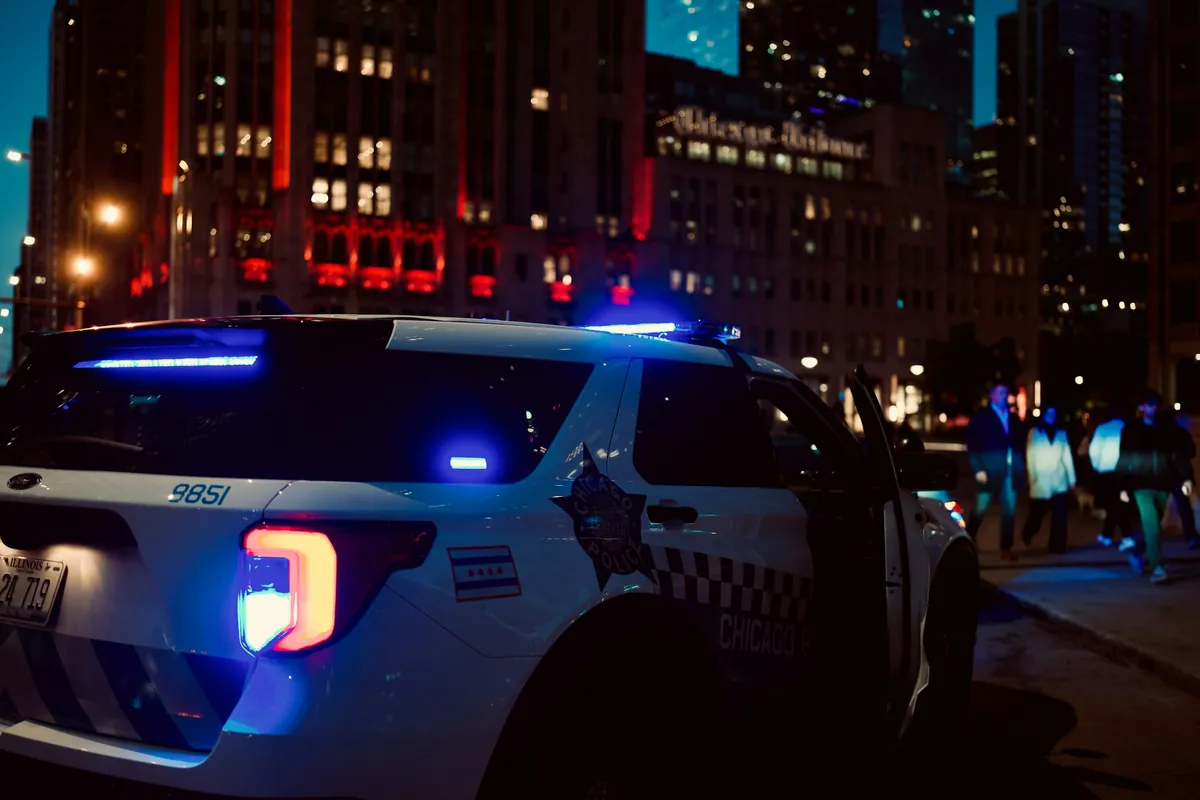
A police car behind you with its lights on, sometimes with a siren, means pull over.
Signal right, slow down, and stop on the right shoulder or somewhere safe. Don't slam the brakes, and don't stop on a curve or a bridge; you can drive slowly until you find a safe spot.
Once stopped, turn off the engine and roll down the window. At night, turn on the interior light so the officer can see inside.
While the officer approaches: stay in the car
Next, the most important rule: don't get out.
Back home some people walk over to explain; in the US, officers usually want you to stay in the car unless they tell you to get out.
Put both hands on the steering wheel where the officer can see them. Passengers stay seated too, hands visible.
Keep your seatbelt on, turn the music down, and wait for the officer to reach your window.
Documents: tell, then reach
The officer will ask for your license, plus the car's registration and insurance.
Foreign visitors usually have: passport, home driver's license, and in some states an International Driving Permit or translation; in a rental, the rental agreement, usually kept in the car, has the vehicle and insurance details.
The key: before reaching for anything, tell the officer where it is. For example: my passport is in my bag, I'm going to get it now. Especially when reaching somewhere they can't see, like the glove box, tell first, then move.
Best to put all of this somewhere easy to reach before you set off.
How to talk
Keep it polite and short. If your English isn't good, just say so, and ask them to speak more slowly if you don't understand.
Don't argue. If you think a ticket is unfair, contest it later as the ticket explains; the roadside is not the place.
And don't lie.
If it's just a verbal warning, say thank you, wait until the officer says you can go, then signal and ease back into traffic.
Tickets: can you pay on the spot?
In the US, officers don't collect fines on the spot. Offering money to an officer can be treated as bribery, and that's serious.
The ticket explains how to pay: usually online, by mail, or at the court, with a deadline.
The second question: if a rental car gets a red-light camera or parking ticket, it goes to the rental company, which charges the fine to your credit card, often with an extra admin fee. So it's best to pay tickets yourself on time.
Rule 1: right turn on red
Now part two: five rules that differ.
Rule one: in most of the US you can turn right on a red light, but you must come to a complete stop first, check for cars and pedestrians, then turn.
If there's a No Turn on Red sign, you can't. In New York City, right on red is not allowed unless a sign permits it.
Rule 2: stop means stop
Rule two: at a red octagonal stop sign, you must come to a complete stop, wheels not moving, not just slow down.
At an all-way stop, the first to stop goes first; if two arrive at the same time, the car on the right goes first.
Rule 3: when a school bus stops, you stop
Rule three: when a yellow school bus stops with red lights flashing and its stop arm out, traffic behind it must stop, and oncoming traffic usually must stop too, until the stop arm is pulled back.
On a highway with a median, oncoming traffic usually doesn't have to stop; details vary by state. Fines for this are heavy.
Rule 4: make way for emergency vehicles
Rule four: if a fire truck, ambulance or police car comes up behind you with a siren, move right and stop to let it pass.
If a police car, ambulance or tow truck is stopped on the shoulder with lights flashing, move over a lane; if you can't, slow down noticeably. Every US state has a law like this.
Rule 5: drinking and open containers
Rule five: drinking and driving. In most states the limit is a blood alcohol concentration of 0.08 percent; Utah is stricter at 0.05 percent. The simplest rule: if you're driving, don't drink.
Also, most states don't allow open alcohol in the passenger area; put a half-finished bottle in the trunk.
General information only. Rules change; check official notices before you go.
Routes, parking and gas stations, shown on maps and real footage, one section at a time.